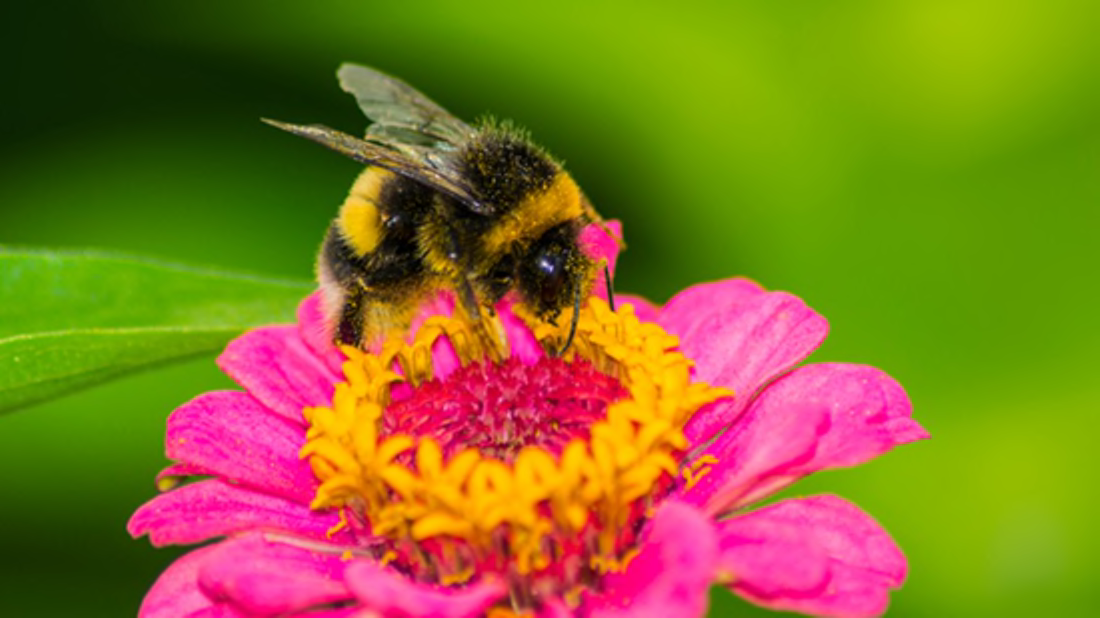
Due to human farming techniques and use of pesticides in order to keep bugs away from plants and vegetables, bumblebees are stumbling upon the insecticide imidacloprid. However, this is not completely lethal to the bees. Once a bee is exposed to this chemical, it doesn't have an affect on that particular bee's lifespan. So then how is this a bad thing?
The exposure of the bees to this chemical causes the bees to become extremely lazy. The bees don't care for larvae as much, don't help in the maintaining of their nest, and avoid social interactions amongst other bees in their colony. If a group of bees within a specific nest was to stumble upon this chemical, the long-term growth and health of that colony will noticeably suffer. Bumblebees have a huge role to play in maintaining the temperature of their nest. If the imidacloprid affected bees are too lazy to do so, once the temperatures outside become too cool, the nest will essentially freeze and die.
The long term effects of these bees being exposed to this chemical could be drastic. If just a few bees are exposed and ingest the insecticide, it quickly has detrimental effects on the bee's nest in question. If these "lazy" bees are continuously mating and not contributing to their respected nests, we could easily see a quick decline in the population of bumblebees. This comes into call for the restriction of these types of chemicals. As we have discussed in class, and even heard during the Beyond Plastics seminar, what we as humans do has a huge effect on the environment as a whole. I believe that if farmers and big companies restrict the usage of pesticides such as imidacloprid and educate themselves on the effects of exposing the environment to certain chemicals, there would be a little more hope for the health of our planet. If companies continue to disregard the impact of themselves on the environment, it could be, and already is, extremely problematic. If the bee population was to go extinct, there would be a huge disruption in the natural systems and food webs we have learned about in class. Bee-eating animals, plants, and us as humans would be affected if the bee population was to decline, or worst-case scenario; disappear.
SOURCES:
[article]
https://www.the-scientist.com/news-opinion/pesticide-exposure-alters-bumblebee-behavior-in-their-nests-65054
[image]
https://images.app.goo.gl/f32botQYhuRHaGxH9


