Sunday, March 29, 2020

As Oceans Warm Fisheries Decline

By: McKenna Donegan

March 29th 2020

A recent study published by the journal Science found that the amount of seafood humans could sustainably harvest from a wide range of species shrank by 4.1 percent from 1930 to 2010, a result of climate change. This might not seem like a lot, but the lead author of the study suggests it is. According to Dr. Chris Free a 4 percent decline is 1.4 million metric tons of fish from 1930 to 2010. The warming of the ocean due to climate change is already having a serious impact on the seafood industry.
Dr. Free notes that fish provide a vital source of protein for over half of the global population, and roughly 56 million people worldwide are supported by marine fisheries. In East Asia the ecosystems have been hit particularly hard, because this area is home to some of the largest growing populations that are highly dependent on seafood. The oceans have absorbed roughly 93 percent of the heat that is trapped by greenhouse gases that are released into the atmosphere. Disastrously, this increase in water temperature has forced fish to move where they live in search of more preferable climates. This affects not only fish but the sources of food they rely on.
In half of the regions studied fish populations did not fare well. For example, the northeast Atlantic Ocean saw a 34% decline in sustainable catches. There were other important trends found in the data. Warm areas turned out even worse when they were overfished. The researches suggest that this is because overfishing meant that fish populations were even more vulnerable to warming temperatures because it harmed their ability to reproduce. Furthermore, fish in colder regions did better than those in warmer water, because the extra heat was just too much. This study highlights that climate change is adversely affecting fisheries, and something needs to be done to account for the loss in productivity.
This topic is related to our class because warming oceans are negatively affecting the earth’s ecosystems. As oceans warm, fish die or are forced to move out of the area, which affects the rest of the food chain. Additionally, this emphasizes environmental sustainability. We need to be able to meet the current human need for fish, but we also cannot compromise the needs of future generations by consuming too much. In order to address this problem I think we need to implement the changes that Dr. Free suggests at the end of the article. Reducing catch limits in warmer years and increasing catch limits in cooler years would balance out productivity. Not overfishing and regulating fisheries will have a positive impact, but unless we all do our part to slow the effects of climate change this problem will persist.
Sources:


Saturday, March 28, 2020

Air Pollution Within the United States

Grace Armstrong
3/29/20
     Air pollution is a pretty clear term, it is when pollutants from things such as factories worsen the air quality in communities. Air pollution is often an overlooked issue in the United States because we are not to the point where enough people are dying of poor quality that the government feels that they need to address it. The map below shows the air pollution in the U.S back in 2014, there it is air that there is an air quality problem in about 1/4 of the country. Those numbers of air pollution have only risen, since 2016 pollutants have risen 5.5% (Washington Post). Air pollution can lead to things such as dementia, cognitive decline, respiratory problems and even death. In 2018 nearly 10,000 deaths in the U.S were linked to the bad air quality (Washington Post). It should also be noted that those suffering from this bad air quality is often the lower class as well as minorities. This relates to our course because we often talk about how the environment is slowly getting worse and is becoming less and less habitable. This is just another example of how we are killing our planet by having so much pollution that the natural cycles are earth cannot turn our air fresh and clean anymore. This also relates to how we discussed the tipping point in an environment or ecosystem, that relates to the air quality/pollution issue as well because we are on our way to a point where air pollution will affect the air quality too much that we cannot come back from it, making our air no longer safe. My viewpoint on this issue is that air pollution should be paid attention to a lot more our government and they should put regulations in place in order to keep the air quality healthy for citizens. Things are just getting worse and we should not get to a place beyond where we can return from.

This photo demonstrates how air pollution is rising across the U.S

Citation: 
Ingraham, Christopher. “Air Pollution Is Getting Worse, and Data Show More People Are Dying.” The Washington Post, WP Company, 23 Oct. 2019, www.washingtonpost.com/business/2019/10/23/air-pollution-is-getting-worse-data-show-more-people-are-dying/.
Alyssa Sullivan
3.29.20
Rainforest Deforestation

     To start, deforestation is the clearing, destroying, or otherwise removal of trees through deliberate, natural or accidental means. It can occur in any area densely populated by trees and other plant life, but the majority of it is happening in the Amazon Rainforest. The loss of trees and vegetation can cause climate change, fewer crops to grow, flooding, and worst of all, increased greenhouse gases in the atmosphere. The increase of greenhouse gases can cause a multitude of issues for humanity and the environment in which we're living. Deforestation is caused by many things, but the main being so the land can be used for cattle feed and farming. This has been an issue for thousands of years, and continues to grow each year. Decrease in rainforest also means a decrease in habitats for animals, insects and amphibians that inhabit there. "Seventy percent of Earth’s land animals and plants live in forests, and many cannot survive the deforestation that destroys their homes.” (Pachamama). Trees also help to control the amount of water in the atmosphere by aiding in maintaining earth's water cycle. Since deforestation is causing fewer trees to exist, less water is available in the air, this causes dryer soil because less water is able to be returned to it. Dryer soil, naturally is going to lead to a decrease in crops being able to grow. 


“Effects of Deforestation: The Pachamama Alliance.” Pachamama Alliance, www.pachamama.org/effects-of-deforestation.

Friday, March 27, 2020

Renewable Energy Plants are Jeopardizing Biodiversity


(Image 1) Photo Credit: McGrath, M. "Climate Change: Green Energy Plant Threat to Wilderness Areas." (2020) BBC, https://www.bbc.com/new/science-environment-520223881 By Priscilla Capuano

The need for renewable energy sources is an issue that has received considerable attention in the past few decades. It is crucial that every nation puts considerable resources into making the transition from fossil fuels to clean energy in order to promote the overall health of the environment. As a result, many nations have made significant strides to promote renewable energy. However, these clean energy plants are threatening wilderness ecosystems that are home to a variety of species (McGrath). These species depend on their surrounding environment for food and shelter. Renewable energy plants have pushed native species out of their habitats (McGrath). Large areas of land must be cleared in order to build new energy plants (See image 1 and 2). In fact, it has been reported that 2,200 clean energy plants are located in Earth’s wilderness (McGrath). Alarmingly, areas containing biodiversity have been taken over by 900 of renewable energy plants (McGrath). The presence of these plants have also created the need for an increase in roads, houses, and infrastructure to be built in order to accommodate plant workers (McGrath). There are a few factors that have contributed to this crisis. First, clean energy plants require ten times more land than energy produced by fossil fuels (McGrath). Second, there has been a dramatic increase in green energy plants (McGrath). Third, human lifestyles have contributed to an increase in energy consumption (McGrath). Jose Rehbein is an Environmental Science author who has cultivated an interest in this topic (University of Queensland). He stated that "These Developments are not compatible with biodiversity conservation efforts" (University of Queensland). Additionally, the potential spread of these plants has raised concern (McGrath). It is projected that there will be a 42% increase in construction of green energy plants within the next eight years (McGrath). Such energy sources will likely be built in wildlife conservation sights (McGrath).
This topic connects to class because it relates to the impacts humans have on the environment, the need for biodiversity, and energy sources. First, this issue covers human impacts on the environment because humans’ over consumption of energy and attempts to reduce fossil fuels have led to putting species at risk. Second, there has been a lack of care when preserving biodiversity and respecting the habitats that creatures rely on to survive. The importance of protecting species’ habitats and the need for biodiversity on Earth was a topic covered in class. Third, in class the need to move from fossil fuel based energy to clean energy was discussed. At the same time, people must weigh the benefits and downsides of clean energy. 
In my view, there are a few things that must be done to alleviate this issue. First, humans cannot merely rely on moving from one energy source to another without taking steps to reduce energy consumption altogether. While humans will likely always need artificial energy sources to some degree, it is necessary to evaluate what can be reasonably reduced. Second, humans must make greater efforts to preserve and protect ecosystems. As was discussed in class, the health of species and ecosystems play a role in the wellbeing of the Earth as a whole. Clean energy projects that put them in danger are counterproductive and should be reassessed.
(Image 2) Photo Credit: https://en.wikipedia.org.wiki/Wind_farm
Works Cited

McGrath, M. "Climate Change: Green Energy Plant Threat to Wilderness Areas." (2020) BBC, https://www.bbc.com/news'/science-environment-52023881.

University of Queensland. (2020) "Renewable Energy Developments Threaten Biodiverse Areas." Phy.org, https"//phys.org/news.2020-03-renewable-energy-threaten-biodiverse-areas.html.


Thursday, March 26, 2020

Plastic Pollution By Kristen Leavitt

       Point: Want Less Ocean Plastic Pollution? Make Less Plastic


Plastic has been a very big part of people daily lives, but have they ever taken the 
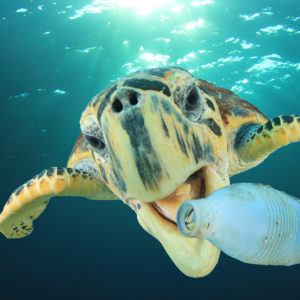
time to see what it is doing to our environment? Plastic pollution in oceans has become a global crisis. The problem is that the amount of plastic being dumped into the ocean has been on the constant increase each year. With all this plastic in the ocean it has become a threat to animals in the oceans. Not only is there micro plastic pollution, but there has been seen to be an increase in macro plastic pollution like whole plastic bags. Macro plastic pollution was always on the incline, but has been drastically increasing since 1990.  It has become such a large problem that there are more and more sharks and other animals washing up onto the shore with plastic filled bellies. Not only is plastic pollution a problem for the animals but it is a problem for us as well. Micro plastic is being found in a lot of our food and drinks that we are consuming. Just like plastic isn't good for the environment plastic is also not good for us.People use plastic in their day to day lives which means that the production of plastic is increasing. Over the past four decades the production of plastic has quadrupled. 

Plastic pollution relates to our class in a number of ways. The first way being that 
the ecological footprint. All this plastic being produced and used once has a very negative impact on the earths ecological footprint. Due to all this plastic being produced and polluted we are starting to reach the tipping point. If the amount of plastic in the oceans continues to increase we could reach a point where there is more plastic in the oceans than water. The goal is to not reach that tipping point so that we can come back from this. Lastly this relates in the sense of overconsumption of materials. 

In my opinion, plastic is always going to be used. There are some benefits to the 
use of plastic but I feel like we don't need to be using as much plastic as we our in our daily lives. We have become very wasteful with plastic. Yes, we are starting to see a change with paper straws and reusable bags in stores now. This change though takes everybody. Everybody needs to start making the simple changes in their own lives, for example instead of using a plastic water bottle buy a reusable water bottle. Also finding uses for the plastic that you once thought was trash. If everybody starts to make the little changes then it will be easier to move forward in making larger changes in steps toward decreasing the production and pollution of plastics 

Sources:
Info
https://www.cnn.com/2019/04/16/health/ocean-plastic-study-scn/index.html
Image
https://www.insidesources.com/point-want-less-ocean-plastic-pollution-make-less-plastic/

Sunday, March 22, 2020

Covid-19 and the Environment


The most recent global crisis that has taken the world by storm has undoubtedly been the spread of the Coronavirus or Covid-19. The spread of Covid-19 has caused the lockdown of hundreds of millions of people globally. While this catastrophe has been going on there seems to be a benefit from this global shutdown. China is the world's leader in carbon emissions and experts have estimated a drop of about 25% in this month alone. The cease of production has lessened the usage of oil and other fossil fuels. On top of less global production, the use of transportation has also decreased heavily. The decline of transportation in major US cities like New York and San Francisco have led to decreased carbon emissions in these cities. The decline in transportation leads to people spending more time in their homes which will undoubtedly raise energy consumption within the home. But this energy usage is less than that of shipping and producing goods around the world.

This relates to our Ecology class because it shows how developed countries are contributing large amounts of CO2 emissions by means of transportation and production. Also, it proves that flying along with traveling by vehicle affects our ecological footprint. The impact of constant jam-packed traffic in major cities plays contributes an unsustainable amount of CO2 emissions that the world is unable to handle. As a whole, this global pandemic has proven a couple of things. One is that if it was a disease that far more deadly our world is nowhere near prepared for that. Lastly that ecological footprint in economically thriving nations is heavily based upon production and transportation.

Image result for new york city empty coronavirusMy take on this is as follows. The impact of the spread of Covid-19 has opened the eyes of many in proving that we need to change the way we globally produce and ship goods around the world. This change obviously won't happen overnight or even within the next several years. This is an issue that will require baby steps so that businesses aren't overwhelmed with the change. It is unfortunate that it took a global pandemic to figure this out but now that we know we have no excuse to not act on this.


This image shows the empty streets of New York City
 during the lockdown. Most businesses closed 
leaving the streets barren. 


Image
https://static01.nyt.com/images/2020/03/22/nyregion/21nyvirus-mood-print/21nyvirus-mood4-superJumbo.jpg?quality=90&auto=webp

Source
https://www.scientificamerican.com/article/how-the-coronavirus-pandemic-is-affecting-co2-emissions/

Thursday, March 19, 2020

The Impact of Overfishing -Robert Lunder

Overfishing has become a global concern as for years many fisheries are catching copious amounts of fish that can't repopulate fast enough before they are caught again. This action causes many types of desired fish by humans, as well as other fish, to become endangered or even extinct. The reason for this is that millions of people all over the globe depend on the ocean for their staple food an income. Fisheries want to maximize the amount of fish they can catch by using large pieces of equipment and fish find trackers. Fisheries have the ability to use huge drift nets that can catch hundreds if not thousands of fish at one time. The United Nations Food and Agricultural Organization describes that over 70 percent of the world’s fisheries are exploited thus, a result of overfishing. The major impact of overfishing has resulted in jeopardizing the ecosystem. Overfishing can cause havoc and destroy the environment completely disrupt the food chain. For example, herring is a prey species for cod. When herring is overfished the cod population suffers too. Overfishing doesn’t just lead to the extinction of one fish, it disrupts the entire food chain. Overfishing can be connected to this course because we learn about sustainability and how using up vital resources too quickly doesn’t give the next generation those same resources. We need to preserve what we have and inforce moderation when it comes to industries like fisheries. At the rate we are going we can completely wipe out many of the oceans fish species thus, causing the food chain to be altered. What I would do is create and enforce laws that constrict the amount of fish you are allowed to capture on each trip by weight. If you are over the weight limit you can be severely fined as you are again jeopardizing the species as well as the environment. Hopefully fisheries can see they are harming the environment and will have careful consideration before it’s too late.


Image result for overfishing effects

CorGROWna Garden: the impact of coronavirus with many people at home By: Rose Wilson

Coronavirus clearly has impacted everyone with most, hopefully, all of us staying home for months. Scientists including Dr. Fauci claim that...